Is Ruth Bader Ginsburg Working Again
WRP gratefully acknowledges the work of intern Sandra Pullman in researching and drafting this Tribute.
The Pioneer
In the words of Ruth Bader Ginsburg, Supreme Court Justice and co-founder of the Women'south Rights Project at the ACLU, "Women's rights are an essential part of the overall man rights agenda, trained on the equal dignity and ability to live in freedom all people should enjoy."
Ginsburg has been a pioneer for gender equality throughout her distinguished career. While singular in her achievements, she was far from lonely in her pursuits and received much back up from talented, dedicated women all along the mode. Celia Bader provided a strong role model for her daughter at an early historic period. Ginsburg recalls, "My female parent told me 2 things constantly. 1 was to be a lady, and the other was to be independent. The written report of law was unusual for women of my generation. For most girls growing up in the '40s, the almost important degree was not your B.A., but your M.R.S."
Ginsburg attended law school, not originally for women'south rights piece of work, but "for personal, selfish reasons. I thought I could do a lawyer's job improve than any other. I accept no talent in the arts, but I do write fairly well and analyze problems clearly."1
Although she arrived without a civil rights agenda, the treatment Ginsburg received as a woman in constabulary schoolhouse honed her feminist instincts. One of merely nine women at Harvard Law Schoolhouse in 1956, Ginsburg and her female classmates were asked by the dean why they were occupying seats that would otherwise be filled by men.
Despite her discomfort, cocky-doubt, and misgivings, Ginsburg proved to be a stellar student, making law review at Harvard in 1957, and so again at Columbia Police force School, where she finished her studies in order to keep the family together when her husband graduated from Harvard and accustomed a job in New York. (Her daughter was built-in fourteen months before Ginsberg entered law school.) This major achievement at two pinnacle schools was unprecedented by any pupil, male or female.
Upon graduating from Columbia in 1959, Ginsburg tied for first in her class. Still, when she was recommended for a clerkship with Supreme Court Justice Felix Frankfurter past Albert Sachs, a professor at Harvard Law School, Frankfurter responded that he wasn't ready to hire a woman and asked Sachs to recommend a human.
Ginsburg had worked for a tiptop law house in New York during the summer of her 2d year in law school. "I thought I had washed a terrific task, and I expected them to offering me a job on graduation," she recalled.ii Despite her functioning, there was no job offer. Nor was there an offer from any of the twelve firms with which she interviewed; just two gave her a follow-up interview.
In the end, Ginsburg was hired to clerk for Judge Edmund L. Palmieri of the U.Due south. Commune Court for the Southern District of New York from 1959 to 1961. She received offers from law firms after that task, only she chose to piece of work on Columbia Law School's International Process Project instead, co-authoring a book on Sweden'south legal system and translating Sweden's Judicial Lawmaking into English.
Continuing in academia, Ginsburg joined the faculty of Rutgers Constabulary School in 1963, but her status as a woman still put her at a disadvantage. When she discovered that her bacon was lower than that of her male colleagues, she joined an equal pay campaign with other women teaching at the university, which resulted in substantial increases for all the complainants.
Prompted by her own experiences, Ginsburg began to handle sexual activity discrimination complaints referred to her past the New Jersey affiliate of the American Ceremonious Liberties Wedlock. Ginsburg envisioned that men and women would "create new traditions past their deportment, if artificial barriers are removed, and avenues of opportunity held open up to them."3 The ACLU Women's Rights Project was born in 1972 under Ginsburg'due south leadership, in order to remove these barriers and open up these opportunities. That same year, Ginsburg became the first woman to be granted tenure at Columbia Law Schoolhouse.
The Trailblazers
 |
| Dorothy Kenyon Photo: Int'l News Photo |
Ginsburg's experiences with sex discrimination inspired her to lead the ACLU'due south campaign for gender equality, but she was not the first person to see the need for the ACLU to dedicate its efforts to women'southward rights. Pauli Murray and Dorothy Kenyon, longtime members of the Lath of Directors outset in 1930 and 1965, respectively, had worked to put gender equality piece of work on the ACLU's agenda.
Dorothy Kenyon was appointed to the League of Nations Committee on the Legal Status of Women from 1938 to 1940 and from 1947 to 1950 served as the first U.S. delegate to the U.Due north. Committee on the Status of Women. A New York City municipal justice from 1939 to 1940, she claimed the title for life. "Judge Kenyon" afterward wrote the ACLU amicus brief in Hoyt five. Florida, 386 U.S. 57 (1961), a Supreme Court case that considered (and rejected) a challenge to a state law that required men to serve on juries just excluded women unless they volunteered.
Pauli Murray became an activist by fighting racial discrimination, when she dedicated an indigent black sharecropper accused of murder, agitated against lynching, and was jailed for her protests as a freedom rider in the 1960s. As Murray explained, "I entered police force school preoccupied with the racial struggle and single-mindedly bent upon becoming a ceremonious rights lawyer, but I graduated an unabashed feminist every bit well."
 |
| Pauli Murray Photo: Univ. of Tenn. Press |
Informed past her own experiences every bit a blackness woman, she drew connections between the legal condition of women and that of African-Americans, using the term "Jane Crow" in her scholarship. She joined the ACLU Equality Committee, where she pushed the organization to focus on sexual practice discrimination and to use the Constitution to challenge it. In 1961, Murray was appointed to the President'south Commission on the Status of Women's Committee on Civil and Political Rights, and in 1966, along with Betty Friedan, she was one of thirty co-founders of the National System for Women (NOW), which she labeled "the NAACP for women."
Throughout Murray'southward and Kenyon's careers, opposition to women's rights remained pervasive and powerful. When the Equal Rights Subpoena was re-proposed in the late 1940s -- having been introduced almost annually since it was initially proposed in 1923 -- fifty-fifty the ACLU voted to oppose it. Kenyon and Murray worked intensely behind the scenes and in 1970 convinced the Board to reconsider its regressive position.
Ginsburg too was a strong supporter of the ERA, explaining, "The subpoena would eliminate the historical impediment to unqualified judicial recognition of equal rights and responsibilities for men and women as constitutional principle; and it would serve equally a articulate statement of the nation's moral and legal commitment to a system in which women and men stand as full and equal individuals earlier the law."4
Kenyon was also 1 of the strongest advocates for the institution of the Women'south Rights Project at the ACLU. At Kenyon's funeral in 1972, just afterward the WRP was founded, Murray reflected, "I think when future historians assess the important issues of the twentieth century they may well conclude that Estimate Dorothy Kenyon was one of the giants who stood in bold relief against the American sky."
Recognizing their efforts on behalf of women's equality at the ACLU and elsewhere, Ginsburg listed both Murray's and Kenyon'southward names on the groundbreaking cursory she authored for the ACLU in Reed v. Reed (off-site), 404 U.S. 71 (1971), even though Murray and Kenyon did not direct contribute to it.
In Reed, the United states of america Supreme Court invalidated an Idaho statute that automatically gave preference to men for appointment every bit administrator of a deceased person'south estate. In and then doing, the Courtroom extended the Constitution's Equal Protection guarantee to women for the kickoff time. Ginsburg has said that her credit to Murray and Kenyon was a symbolic gesture to reflect "the intellectual debt which contemporary feminist legal argument owed [them]."5
Ginsburg's Supporting Bandage
In the early on '70s, observes Susan Deller Ross, who joined WRP equally a staff attorney in 1975, the ACLU was "lukewarm towards women'south rights problems; it took someone of Ginsburg's vision and leadership to found the Women's Rights Project."
 |
| Brenda Feigen |
According to one contemporary observer, the Reed opinion was "a telephone call to arms" and Ginsburg was the "General" leading this foray.vi Under her guidance, "Troops were assembled, and a strategy for attack was painstakingly planned."vii
In 1972, as office of this effort, Brenda Feigen was contacted past Mel Wulf, the legal director of the ACLU; Ruth Bader Ginsburg was looking for a co-director for the newly formed Women's Rights Project. "It was a great honor," Feigen remembers. Even so, she needed time to consider. Feigen, whose legal expertise had previously proved invaluable in her piece of work as legislative vice president of At present, had just launched Ms. magazine with Gloria Steinem, and she hesitated to leave her fledgling publication. Finally, with a "approval from Gloria," as Feigen puts information technology, she joined WRP in tardily 1972.
The two founding directors sought out an unused expanse in the ACLU part, where they hung the sign: "WOMEN WORKING." In those early years, there was much piece of work to be done. "We knocked down a lot of barriers for women, not only on the noun level. Nosotros also challenged what blazon of judicial scrutiny practical to gender discrimination under the Equal Protection Clause of the 14th Amendment," Feigen explains.
Kathleen Peratis, who became WRP's managing director in 1974, agrees that establishing heightened scrutiny for sexual activity classifications under the Equal Protection Clause was perhaps the decade'due south greatest achievement. Prior to that time, while the government's discrimination based on race was subject to the strictest scrutiny, discrimination based on gender was permissible if whatever reason at all could be hypothesized for the differential treatment.
In Frontiero v. Richardson (off-site link), 411 U.S. 677 (1973), the first case that Ginsburg argued before the Supreme Courtroom, WRP advocated for the application of strict scrutiny to gender discrimination just every bit the concept applied to race discrimination. 4 Justices supported this view, one vote shy of a majority. Through a serial of decisions in the wake of Frontiero, an intermediate standard of review was established, a standard requiring the government to bear witness that whatsoever sexual practice classification it defended had a "substantial relationship" to an "important land involvement."
In describing Frontiero, which she co-counseled, Feigen expresses great respect for Ginsburg'south advocacy. "It was brilliant," she gushes.
"I've never heard an oral argument equally unbelievably cogent as hers." Ginsburg spoke from memory, citing cases and speaking about women's history without always turning to her notes or checking any citations. "Not a single Justice asked a unmarried question; I recall they were mesmerized past her," Feigen declares.
Ginsburg herself describes the feel as a fleck more tumultuous. "I was terribly nervous. In fact, I didn't swallow lunch for fear that I might throw up." Yet she eventually found her rhythm. "Ii minutes into my argument, the fear dissolved. Suddenly, I realized that hither before me were the nine leading jurists of America, a captive audition. I felt a surge of power that carried me through."viii
In the finish, Ginsburg seemed physically tuckered by the endeavour. As Feigen left the courtroom with her, Ginsburg seemed hardly able to process directions to the airport shuttle, and Feigen gladly escorted her home to New York. Feigen laughs, thinking back on her colleague'southward behavior. "Literally, her head is in the police force, and sometimes in the opera," she remarks of Ginsburg.
Deb Ellis, a WRP staff attorney in the mid-80s, applauds Ginsburg's tactic of occasionally using male person plaintiffs in equal protection cases, including Frontiero, to demonstrate that sex-based distinctions harm men and women -- indeed, unabridged families. Sharron Frontiero's married man, Joseph, wasn't eligible for spousal benefits from her work in the uniformed forces because he failed to prove economic dependency on his married woman, a condition not required for wives of male members to qualify for the same benefits. While some would have focused solely on the injustice such rules piece of work on women, Ginsburg rejected differential handling based on gender as inherently harmful to all involved.
In Weinberger v. Wiesenfeld (off-site), 420 U.South. 636 (1975), Ginsburg continued to develop this analysis when she successfully argued against a provision in the Social Security Act that denied to widowed fathers benefits afforded to widowed mothers. She made the case that the nomenclature discriminated against working women, whose social security taxes garnered fewer family benefits than the taxes paid for working men. She also argued that the law denied men the aforementioned opportunity as women to care personally for their children. Ginsburg and Feigen adept an egalitarian arroyo non only in their legal arguments, only too in their own family lives.
"Both of the states agreed that we didn't want to deprive the fathers of our children of the feel of existence fathers -- or the children of having fathers involved in their daily lives," Feigen explains. In fact, she recalls Ginsburg's annoyance i day with officials at her son'southward school, who invariably called her at work when he was sick or, more oftentimes, in problem. Ginsburg told them that day that her son had two parents. She would capeesh information technology if they would alternate calls. That fourth dimension, it was her married man'southward plow.
As a staff attorney from 1976 to 1979, Jill Goodman as well remembers Ginsburg negotiating her roles as a lawyer and a female parent. On one occasion Ginsburg was doing final edits on a Supreme Court brief the evening before Thanksgiving with an heart on the clock, keenly enlightened of just when her college-age daughter would exist arriving home -- manifestly eager to see her daughter, just steadfastly committed to finishing the piece of work at mitt without compromise.
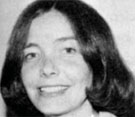 |
| Margaret Moses |
Margaret Moses, who came to WRP as an chaser in 1978, taught a gender discrimination grade at Columbia in conjunction with Ginsburg during her time there. She recalls the example her co-teacher set in the domicile. For the last form in the fall of 1979, Moses invited all the students over to her apartment for dinner. "Ruth'south husband, Marty, and mine cooked in the kitchen while we taught the class," Moses reminisces. "It was a nice way to stop a gender discrimination seminar!"
Emerging Leadership Nether Ginsburg'south Guidance
Brenda Feigen left WRP in 1974 to pursue total-fourth dimension advancement for the Equal Rights Subpoena. That same twelvemonth, Ginsburg joined the ACLU Board of Directors, having become General Counsel in 1973. Though Ginsburg remained heavily involved in WRP'due south piece of work until 1980, the original directors had moved on; in their identify, Kathleen Peratis took over the captain of WRP.
As manager, Peratis continued to find neat success in gender bigotry litigation. She recalls that employers were unprepared for such lawsuits and were ill-equipped to mountain valid defenses. "It was a time when we filed a case and practically got a upshot in the return postal service!" she exclaims. Peratis admits that the tide seemed to be going so strongly in her favor, she once considered a lawsuit against the unabridged country of Georgia and its employers at all levels for bigotry against women.
In the press, WRP and its new leader's preeminence in advancing women's rights was duly noted. The victory in Turner five. Dept. of Employment Security (off-site), 423 U.S. 44 (1975), which struck downwardly a law making pregnant women ineligible for unemployment benefits, was covered on the front page of the New York Times. Peratis was quoted in the article and described equally being significant during the litigation. Later, Aryeh Neier, and then executive manager of the ACLU, remarked, "But the queen of England and Kathleen Peratis take their pregnancies announced in the Times!"
Pregnancy bigotry cases were a primal role of WRP'southward calendar during this period; however, one of the nearly successful efforts mounted past WRP began with a setback. In General Electrical Co. v. Gilbert (off-site), 429 U.South. 125 (1976), the Supreme Court rejected the reasoning of WRP's friend-of-the-court brief that pregnancy discrimination in the workplace was tantamount to sex discrimination.
 |
| Susan Deller Ross |
Such discrimination, the Court concluded, did non treat women and men differently; rather, it treated pregnant women differently from nonpregnant persons. After losing that battle, WRP staff attorney Susan Deller Ross helped rally WRP's supporters to form the Coalition to End Discrimination Against Significant Workers. Ginsburg and Ross co-authored a column for the New York Times, calling for legislators to mend the law postal service-Gilbert, and they continued lobbying, reporting, and testifying in Congress. The result of their efforts was the passage of the Pregnancy Bigotry Deed in 1978, an amendment to Title Seven that established that pregnancy discrimination in the workplace is unlawful sex discrimination.
During these years, WRP set an example of accommodating working mothers at the office. To balance the competing demands of family and career, women brought their newborn children to work with them. "We established a little daycare middle in the part for Kathleen [Peratis], who too had a new baby, and me," recalls Susan Deller Ross, who was hired in August 1975 and gave birth that Nov. College students were hired to wait afterward the infants, and the lawyers would breastfeed during the day.
"Information technology was wild," Jill Goodman recalls of the lawyers working with their children by their side. "Now that I've had my ain children, I realize how actually wild that was." Though Goodman didn't then have whatever children, she contributed to the daycare on occasion. "I can call back taking a stroller out when Susan needed to work," she recalls.
This tradition continued in later years. Joan Bertin gave nascency to 2 children that she describes every bit "ACLU babies" in her fifteen years with the WRP from 1979 to 1994. She kept a crib and baby'due south swing in her function and took occasional nursing breaks from round-the-clock depositions. Bertin considered the setup a "very workable compromise." Only not everyone at the ACLU shared that point of view. Ross recalls hearing others complain, "If nosotros brought our babies to work, then they should be able to bring their dogs."
Nevertheless, Mary Heen, who every bit a staff chaser in the early 80s occupied the part next door to Bertin and her baby, insists that the arrangement worked out quite well: "For me it was no problem; I love the fact that she was able to practice that -- but I imagine information technology was exhausting."
At work in the bustling ACLU office in the 1970s, WRP staff addressed a host of issues earlier legislators and administrators as well as in the courts. One of the major battles was over forced sterilizations, specially for poor women in the South.
Many women had been told that they had to undergo surgical sterilization or risk losing their jobs or welfare benefits and were thus coerced into giving up their right to bear children. In the tardily 1970s, Feigen helped Senator Edward Kennedy's staff formulate federal regulations on sterilization procedures, specifically establishing consent requirements.
When Joan Bertin arrived at WRP in 1979, sterilization was still a major issue. One of the cases in which she was nearly emotionally invested involved a lawsuit against American Cyanamid, which had required its female person workers to be sterilized to keep their jobs -- and after eliminated those very jobs. Bertin worked closely with the women'south spousal relationship to fight for their rights and the rights of all employees to a safe workplace, securing a favorable settlement out of court.
Bertin and WRP continued to remain heavily involved in similar cases, and the result was ultimately resolved favorably in the Supreme Court. In addition, the ACLU Reproductive Liberty Project was founded every bit a separate entity to handle cases pertaining to women's reproductive rights and control over their bodies.
Marjorie Mazen Smith joined WRP in belatedly 1976, and though she describes herself as a "jack of all trades" because of the variety of cases she litigated in her 16 months on staff, two of her major cases dealt with gender restrictions in the U.s.a. Navy.
In 1977, in Beeman v. Middendorf, 425 F. Supp. 713 (D.D.C. 1977), WRP successfully challenged a rule barring women in the community service from working aboard navy ships. One yr after, in Owens v. Brownish, 455 F. Supp. 291 (D.D.C. 1978), Smith challenged a similar ban that excluded all women from working on navy vessels in whatever capacity. Ginsburg oversaw Smith's work, and the two received a summary judgment ruling in their favor from the federal district court.
Later, when Smith wrote to congratulate Justice Ginsburg on her appointment to the Supreme Courtroom in 1993, Ginsburg thanked her in writing and included the line: "Recent press reports about the Navy recalled for me the great chore you did earlier Judge Sirica." Smith was surprised and flattered to hear the praise of her work recalled so many years afterward. She framed the alphabetic character and keeps it to this day.
During this menstruum, in cases representing women in the armed services and in other nontraditional occupations, such as policing and firefighting, WRP began its work to assist women gain entry to traditionally "male" jobs that continues to this mean solar day. Kathleen Peratis had a particular interest in employment-related issues and the protection of working women. One of the many employment discrimination cases she brought at WRP was a challenge to the City of Philadelphia's refusal to hire women as police officers in Brace v. O'Neil, 1979 WL 157 (E.D. Pa. 1979). In the case, WRP successfully rebutted the City's assertion that women couldn't practice the job.
Susan Deller Ross likewise worked to champion the rights of women in the workplace, fighting not only for those women who wished to do jobs traditionally held by men, only for the rights of women in traditionally female occupations. In Christensen five. Iowa, 563 F.second 353 (8th Cir. 1977), the Academy of Northern Iowa'southward ain job evaluation showed that the all-female person secretarial workforce's wages should be the same as those of the all-male groundskeepers considering the jobs were of equal value to the University. The University nevertheless paid the men more than the women, claiming that the market required them to do so.
Ross and Peratis represented the female clerical employees in their sexual activity discrimination lawsuit. Ross's appellate brief to the Eighth Circuit advanced the idea of comparable worth in the workplace, using the employer's own evaluation to argue that the secretaries were in fact entitled to the aforementioned pay with the groundskeepers, despite the fact that they performed different tasks. Although WRP lost this case, the influential comparable worth theory was first formulated here.
Past the end of Ginsburg's tenure at the ACLU, her reputation preceded her, recalls Margaret Moses, who came to WRP in 1978 specifically to join her favorite law professor. At the time, the U.Southward. Attorney's role had likewise made Moses a job offer, and her prospective boss dismissed the ACLU every bit a valid alternative. However when Moses explained that she was considering the Women'south Rights Project because Ruth Bader Ginsburg was one of the iv general counsels, she noticed a funny expect on his face.
"He'd had Ruth every bit a professor at Rutgers," Moses recalls. "And at that bespeak, I think he understood that I actually might turn down the U.S. Chaser'south role for the WRP." She did just that. Moses did not regret her conclusion, as the experience of working with Ginsburg proved to be illuminating. "She was an excellent office model -- that combination of existence brilliant and working very hard prepare a high standard to do the very best yous could, to attempt to emulate her," Moses explains.
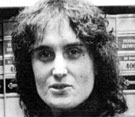 |
| Isabelle Katz Pinzler |
Isabelle Katz Pinzler, who worked at WRP from 1978 to 1994, arrived toward the end of Ginsburg's tenure and recalls beingness somewhat intimidated by her at first. She remembers that the staff would work very difficult on a cursory, but would manus it to Ginsburg labeled "rough draft" considering they had learned that even the nearly thoroughly edited brief would come up back every bit "a sea of red."
Jill Goodman too admits that at times "it was scary" working for Ginsburg, describing her equally "meticulous" virtually everything she did. Ginsburg acknowledges that she is, in full general, "fussy virtually the quality of the product."9
Goodman puts it another way: "Ruth was almost a unlike species," she jokes, describing the unbelievable level at which Ginsburg worked. It was non that Ginsburg did not appreciate their work, Pinzler is quick to explain; rather, Ginsburg taught them to write well-baked sentences and get to the middle of a matter. "She taught me so much about using words precisely, to hateful exactly what I want them to mean, no more, no less," agrees Goodman. Overall, Goodman felt she had learned much about the profession from Ginsburg. "She has an aura about her, of intelligence and care -- care almost the law, and the arts and crafts of lawyering, and the trajectory of the law."
These qualities did not go unnoticed exterior the ACLU. In 1980, Ginsburg was appointed a Estimate of the United States Courtroom of Appeals for the Commune of Columbia Circuit, marking the end of her time every bit an ACLU litigator. More than a decade after, President Clinton nominated her equally an Associate Justice of the Supreme Court, and she took her seat August 10, 1993.
WRP was conceived past Ruth Bader Ginsburg to fight for equal treatment of both genders. "The Project was so integral in establishing the principle of equal rights," asserts Mary Heen. She describes Ginsburg's vision of "filling the empty cupboard." The way the WRP co-founder saw it, the Constitution contained grandly full general clauses (Due Procedure, Equal Protection) that could be used to advance women'due south full citizenship stature.
Until the 1970s, the document had rarely been recognized by courts as relevant to women'southward claim to equality. But Ginsburg sensed growth potential. By the time Ginsburg took her place on the bench, she had done much to stock the cupboard. WRP was prepared to keep the fight for women'southward rights into the next decade and across.
New Faces, New Bug
Afterward the Ginsburg left the ACLU, WRP continued to evolve. Its emphasis broadened from Equal Protection litigation, which was a key focus for Ginsburg, to include more than all-encompassing efforts to secure the rights promised women by Title Seven and other anti-bigotry statutes.
Isabelle Katz Pinzler and Jill Goodman: Women in the Military machine
Isabelle Katz Pinzler describes her tenure every bit the Manager of the WRP in the 1980s after Ginsburg's divergence as a time for a "consolidation of gains" in the women's rights movement. "It wasn't as dramatic or headline-making equally when Ruth was there," she acknowledges. Still, the period was an important time to enforce recently earned rights. "It was a lot of hard work with less celebrity," Pinzler concludes.
1 of the most of import cases that Pinzler worked on after Ginsburg left was Rostker v. Goldberg (off-site), 453 U.S. 57 (1981), which she co-counseled.
The issue was whether requiring selective service registration only of men violated the constitutional guarantee of equal protection. WRP lost the case, and the Supreme Court upheld Congress' prerogative to classify on the footing of gender in selective service registration. Nevertheless, Pinzler believes that fourth dimension and history have reduced the loss. In today's all-volunteer army, the military tin no longer afford to overlook women'south contributions. She sees it as a triumph that most people now honor "our men and women in uniform," rather than "our boys."
Jill Goodman also sought women'due south equal treatment in the military, though she initially approached this piece of work with uneasiness. "I came of age in an antiwar era," she explains. "We weren't just antiwar. Nosotros were anti-military machine. But I learned from our plaintiffs about the role of the military, not just in society, but in the personal lives of citizens."
Goodman elaborates, "The armed services is a remarkable opportunity for many people in this country. It helps them to get out of modest towns; to gain didactics, chore training and feel; to serve; and to achieve status in their eyes and the eyes of the world." With a predominately male military that excludes women from combat, "women are deprived of that credential." Goodman describes how the experience of getting to know her plaintiffs, both officers and enlisted women, broadened her perspective. "I've never felt the same way about the war machine since," she acknowledges.
Mary Heen and Deb Ellis: Equal Handling in Insurance
In a series of cases, WRP relied on Title Seven to challenge employer-provided pension plans that required women to pay more than men for the same benefit, or that provided lower monthly benefits to women than to men. These disparities were purportedly justified past women's longer projected lifespans; individual women'southward contributions or benefits were calculated based on conclusions about how women on average would fare nether such plans.
In Manhart v. Los Angeles Department of H2o & Power (off-site), 435 U.S. 702 (1978), a case in which WRP filed a friend-of-the-court brief, the Supreme Court held that a retirement programme that required women to contribute more than than men to obtain the same benefit violated Title Seven.
WRP attorneys challenged the mirror version of this discriminatory arrangement in Peters 5. Wayne Land Academy, 463 U.S. 1223 (1983); there, women and men paid equal sums into the retirement plan, but women received lower monthly benefits than their male counterparts upon retirement. WRP lost on appeal, merely immediately thereafter, the Supreme Court decided Arizona Governing Committee for Tax Deferred Annuity and Deferred Compensation Plans 5. Norris (off-site), 463 U.South. 1073 (1983) -- another case in which WRP had drafted a friend-of-the-court cursory -- and held that this kind of system violated Championship VII.
The Court reversed the appeals court's decision in Peters in light of Norris, and the case was resolved favorably before long thereafter. The principles established in these cases required all employer-sponsored insurance and pension plans to treat men and women equally.
Mary Heen is proud of her role in helping to establish this Championship VII precedent prohibiting discriminatory employer-provided pension plans.
However, Championship 7 prohibits sex discrimination only on the chore. WRP was involved in an effort to pass federal legislation to prohibit individual insurers from discriminating in other contexts. But as Heen observes, "We were never successful in public relations with regards to non-employment insurers." Heen identifies the issue every bit "one huge area still waiting for reform every bit a matter of principle."
Deb Ellis agrees that differential treatment of men and women in private insurance policies was i of the unresolved issues of her tenure at WRP from 1986 to 1989. WRP attempted to apply the Equal Rights Amendments in land constitutions to challenge such insurance plans. "Nosotros had some success, but not a lot," Ellis recalls. The litigation proved difficult, because in some cases, differential rates do good women, although in other cases, women are disadvantaged.
"The difficulty is that the difference to any ane woman is slight -- not enough to sue -- and the insurance companies are extremely powerful," Ellis explains. Even in 2005, individual insurers still commonly use sexual activity-based rates for health and life insurance. "The principle is important," Ellis maintains. "This is i area of American life where companies are allowed to make sex-based distinctions when distinctions based on race or ethnicity would be unacceptable."
Though Ginsburg no longer had any formal affiliation with the ACLU when WRP litigated these problems in the 80s, she was pleased to see the staff's standing efforts in pursuit of gender equality. As Heen recalls, "Ruth Bader Ginsburg was appointed to the U.Southward. Court of Appeals in 1980 before I began as a staff counsel at the ACLU -- then I never had the opportunity to work with her. However, she sent me a brief note afterwards seeing a letter to the New York Times I had written arguing for the elimination of sexual practice discrimination in insurance. It was a generous and encouraging matter for her to do, and it meant a lot to me to receive information technology from her."
A Joint Effort: Pregnancy Discrimination
When Ginsburg became an assistant professor of law at Rutgers Law School in 1963, pregnancy discrimination remained a tremendous barrier to working women. Fearing that her twelvemonth-to-year contract would not exist renewed if her pregnancy showed, she took measures to conceal her state. "I got through the spring semester without detection, with the help of a wardrobe one size larger than mine, borrowed from my mother-in-constabulary," she recalls. She ultimately gave birth before the fall semester began.10
Fighting bigotry on the basis of pregnancy has been an ongoing boxing of the Women's Rights Projection since its inception, and nearly every staff member has been involved at i indicate. The longest-running case has been Knox- Schillinger v. TWA, which began in the 1970s. "Kathleen Peratis left it on my doorstep like a foundling," recalls Isabelle Katz Pinzler, who joined WRP in 1978 and later took over as director until 1994.
The conform challenged TWA's practice of firing female person flight attendants upon learning of their pregnancies. To prove that impending maternity was non an indicator of incompetence, "we made damn sure the lawyer who appeared in it was meaning," Pinzler declares. The case dragged on for years and was passed on to whoever was pregnant at the time, since the office always seemed to accept someone expecting. In 2003, more than twenty years after it was launched, the example was back in courtroom, to make up one's mind TWA'due south obligations, in view of its bankruptcy, to the flight attendants with whom it had long agone settled. Upon hearing of the delayed resolution, Mary Heen, who had worked as co-counsel on the example, was amazed. "That'south more than twice the length of the Odyssey!" she exclaimed. "Let justice exist done!"
One of the nigh contentious women's rights cases, which divided the ACLU, dealt with the rights of pregnant women. In California Federal Savings and Loan v. Guerra (off-site), 479 U.S. 272 (1987), the question was whether Title VII permitted a state to require employers to offering women childbirth exit while requiring no go out for other disabilities. The ACLU of Southern California (off-site) argued that Championship VII permitted this. WRP and the national ACLU disagreed.
They asserted that the Pregnancy Discrimination Deed's mandate that pregnancy be treated like any other disability meant that if exit were provided for childbirth, the same entitlement to get out must be extended to all employees temporarily disabled. The Court agreed with the ACLU of Southern California. It held that the Pregnancy Discrimination Act (off-site) was a floor, not a ceiling, for the rights of pregnant workers and did not prohibit a country from requiring childbirth leave.
Joan Bertin was specially involved in pregnancy discrimination cases during her tenure from 1979 to 1994 at WRP. She focused on fighting bigotry based on employer assertions that a workplace posed a run a risk to any fetus a woman might conceive. This became a very specialized expanse of litigation, and Bertin spearheaded a nearly twelve-year campaign that resulted in an important victory earlier the Supreme Court.
"We fought molar and nail on every ground," Bertin recalls. In UAW v. Johnson Controls (off-site), 499 U.S. 187 (1991), a case in which WRP filed a friend-of-the-court brief, the Court held that Title VII prohibits employers from keeping women out of jobs that might expose their fetuses to hazardous substances. The key, Bertin believes, was recognizing that the solution to workplace hazards wasn't to eliminate pregnant workers, merely to eliminate the hazards they faced.
Jackie Berrien arrived at the ACLU in 1989, at the summit of WRP'south challenges to employers' fetal protection policies. She describes a adjust against the Odeon restaurant as her "personal favorite." The example was brought on behalf of a maitre d' who was removed from her position when her bosses decided they didn't wish to apply a visibly pregnant woman. In a deposition before the trial, the owners justified their actions by insisting that a pregnant woman shouldn't be near rut and knives in the kitchen. "Information technology was one of the oddest justifications I'd ever heard," Berrien notes. "God knows no significant woman has ever been exposed to oestrus and knives in a kitchen!" Immediately later that deposition, the instance settled in the woman's favor.
Berrien herself did much public education work effectually the rights of pregnant teens in schools, and she hoped to litigate cases establishing these rights. "My gut always told me that those cases existed, young women existence forced out of schoolhouse [because of pregnancy], but we couldn't place many."
The good news was that the threat of ACLU litigation was often enough to resolve any such complaints; in general, a phone phone call to explain the constabulary was sufficient to protect the rights of the pregnant student. Yet for ceremonious rights and civil liberties lawyers looking to set precedent in this surface area, such easy settlements are not ever perfectly aligned with personal and professional agendas.
"It was for me a real indicate of maturing equally an attorney, recognizing that the almost important thing is a favorable upshot for your customer, though sometimes that isn't reconciled with what you're trying to do professionally," Berrien concludes. Berrien points out that at the time of her and Kary Moss's arrival at WRP, there was "an explosion of the crack cocaine trade."
As a result, WRP had much work to do addressing the application of drug control policies to pregnant women, as the allegedly unique harm from the drug to a fetus in utero was idea to justify extreme measures infringing on women's rights. Many women were being criminally prosecuted for child corruption or commitment of drugs to a pocket-size due to drug and alcohol addiction during pregnancy. In the mid-80s, Berrien and Moss had published some of the get-go literature on criminal prosecution of expectant mothers for substance abuse. In Kentucky v. Welch, 864 Southward.W.2d 280 (Ky. 1993), WRP succeeded in persuading the Kentucky Supreme Courtroom to overturn a Kentucky woman'south conviction for kid corruption when the conviction was based solely on show that she had taken illegal drugs while pregnant.
 |
| Kary Moss |
Moss besides addressed access to health care for meaning women. One of her lawsuits challenged a private hospital's refusal to accept pregnant women for drug and booze treatment. "We demand to terminate blaming women for their addictions," Moss insists. She brought in the wellness care community to work with her, every bit a national argue emerged on the issue. Years later, the work accomplished past WRP staff and others on this issue continued to have a positive impact.
In 2001, in Ferguson v. City of Charleston (off-site), 532 U.S. 67 (2001), the Court held in an opinion joined by Justice Ginsburg that a public hospital's policy of testing all meaning patients' urine for cocaine and reporting positive results to the police violated the Fourth Subpoena. The hospital had argued that the policy was motivated by a special need to protect the health of the fetus. (WRP and the Reproductive Freedom Projection submitted a friend-of-the-court brief in the example.)
Berrien notes, "I was struck by how much the Court was rejecting" the hospital's justification even at oral argument. Though the fissure cocaine crisis of the late '80s had precipitated many harsh measures against drug users, past that time there was a growing acknowledgment, Berrien explains, that "the line between medical treatment and prosecution was a dangerous one to cantankerous."
More than people understood that prosecuting meaning drug users risked driving women away from medical aid, and almost all courts that had considered the issue had overturned such prosecutions. Even so, this fight continues. For case, in 2003, a full decade after the Welch case, WRP attorneys returned to court to successfully defend this precedent when another Kentucky adult female was prosecuted for child abuse based on show that she had used drugs during her pregnancy.
Jackie Berrien: Intersectionality
Jackie Berrien explains that when she joined WRP in 1989, "there was a very conscious and deliberate effort to brand the Project more overtly and directly responsive to the needs of women of color." The ACLU's legal managing director wanted to advance the system's progress on problems of race and poverty, engaging constituencies non traditionally involved with the ACLU. "Now it's probably a routine part of thinking at the ACLU, only it was not common in the early stages," Berrien notes. Describing the increased engagement of WRP and the ACLU with questions of racial inequality, Berrien explains, "Some of the background was laid when I was there."
Berrien, who is today the banana director of the NAACP Legal Defense Fund, explains, "I was always interested in issues that connected race and gender."
Even in cases with a traditional women's rights focus, such equally WRP'southward claiming to the all-male access policy of the Citadel, a public military college in Due south Carolina, Berrien was able to apply a unique lens. For instance, she helped draft the comparison of sex segregation and race segregation in pedagogy in WRP's legal briefs. Afterward, in the legal battles over the all-male person access policy of the Virginia Military Institute (VMI), VMI attempted to defend its exclusionary admissions by arguing that a women'south leadership university created at another Virginia college constituted a "dissever simply equal" opportunity for women.
Justice Ginsburg authored the opinion in U.s. v. Virginia et al. (off-site), 518 U.South. 515 (1996), that rejected this justification, just as similar "separate just equal" arguments had been rejected in Brown 5. Board of Education (off-site). "These parallels were always very interesting to me," Berrien explains. While Berrien was at the ACLU, a movement began to create all-male public schools in inner cities, under the assumption that single-sex activity education would benefit African-American boys and young men.
At a roundtable at the National Urban League and in a publication for the Columbia Instructor's College, Berrien argued against the notion. Rather than a solution to the educational needs for the blackness community, she saw the concept as a "superficial quick fix" for what she identified equally a "broader trouble not past any ways limited to boys." The push for unmarried-sex education in inner city school districts continues with renewed strength today.
Sara Mandelbaum: Equal Access to Education
Arriving in 1992, Sara Mandelbaum remained at WRP after Isabelle Katz Pinzler and Joan Bertin ended their fifteen-year terms. Mandelbaum had definite ideas of what was needed in the area of women's rights: "I wanted to do cases that could not easily be washed by individual lawyers." She explains that the private bar had taken on many Championship Seven cases against large corporations, because that was where big financial settlements could be obtained.
Mandelbaum wanted WRP to stand for women with few legal resources, women of color, and poor women. When women in Westchester asked her to bring a suit against a state lodge that denied them golfing rights on a par with men, she took a pass. Educational activity was a central area for Mandelbaum. She represented teenage girls denied entrance to the National Honor Society because they were meaning and girls who were told they were too fat to be cheerleaders. And when it came to single-sex education, she rigorously challenged gender-segregated study in public schools. Mandelbaum sought to discredit the widely held belief that men and women are all-time served past separate bookish environments. The cases in the 1990s challenging all-male person schools, she explains, were very significant in showtime to rebut this notion.
The well-nigh high-profile case brought by WRP in this arena was Shannon Faulkner's confronting the Citadel, which ended in victory in 1995. Faulkner was a loftier schoolhouse educatee who was initially admitted to the all-male academy based on her qualifications, and later denied entrance when the Citadel realized she was a woman. The highly visible litigation "gave the Project a existent clan with instruction cases, which led to other opportunities in that area." During this time period, WRP attorneys also consulted with the U.Southward. Justice Department in its challenge to VMI's all-male policy and filed friend-of-the-court briefs in support of women's access. Both cases were ultimately successful, and "winning was very, very exciting," Mandelbaum recalls.
In the Supreme Court decision striking down VMI's all-male admissions, Justice Ginsburg'due south stance rejected the use of social science information that purported to prove that men and women learned differently, data from which VMI was "drawing frightening conclusions," according to Mandelbaum. For Mandelbaum, an important role of the case was the Supreme Court's refusal to credit a technique she identifies as one often used by anti-feminists -- reliance on "pseudo-science" to justify discriminatory policies.
Standing Careers
Beyond WRP, the former staff'south paths have been as varied as their interests while at the Project. Ruth Bader Ginsburg has been on the federal bench for twenty-five years. In 1993, she became the second adult female ever to serve on the United States Supreme Courtroom. Throughout that fourth dimension she has continued to be a leading vocalisation for gender equality, women'south interests, and civil rights and liberties. Earlier and since her pinnacle to the Court, she has been a living illustration of the remarkable ability of precise and persuasive legal analysis and has inspired women's advocates across the country and the world.
Brenda Feigen has published her memoirs, titled Not One of the Boys: Living Life as a Feminist, and currently practices entertainment constabulary in Los Angeles. Learn more >>
Kathleen Peratis is currently a partner at the New York police house Outten and Gilded, where she specializes in sexual harassment and employment discrimination cases. Learn more >>
Susan Deller Ross considers her current work for women's rights in Africa as "going forth in the spirit of the ACLU Women's Rights Project." She is Director of the International Women's Human Rights Clinic at the Georgetown University Police Heart, following a stint at the U.S. Justice Department's Civil Rights Division. Under her guidance, students take cases involving domestic violence, trafficking in women and girls, domestic servitude, sex activity-based divorce laws, female person genital mutilation, and many other cases of institutionalized male supremacy in African nations. Ross describes her students' work every bit "just like early sex bigotry cases under our Constitution." Learn more than >>
Marjorie Smith believes that she has been "a general citizen in the expanse" of women's rights since leaving WRP. She has worked for the Department of Consumer Affairs, Manhattan Family Court, New York Metropolis's Legal Aid Lodge, and as a partner in private practice for many years. Today, Smith is an assistant professor at Brooklyn Law School and Assistant Director of the Second Look Program Clinic in charge of prisoner aid. Learn more >>
Jill Goodman took a job with the Function of Civil Rights in the U.S. Section of Instruction and and then worked for eight years at the New York Attorney General's Office. Today, Goodman works for the New York State Judicial Committee on Women in the Courts, where much of her time is spent addressing violence confronting women, including domestic violence, sexual violence, and the closely related bug of prostitution and trafficking. WRP did not specifically face these issues during her tenure; however, Goodman says, "I have come to believe they are at the root of the unequal status of women, both as its cause and consequence." The WRP agrees, and fighting violence against women is an important part of its calendar today. Acquire more >>
Subsequently leaving WRP, Isabelle Katz Pinzler served in the Section of Justice under President Clinton. She then became special counsel to the NOW Legal Defense and Education Fund and a visiting professor at New York Law Schoolhouse. She recalls thinking about the hereafter of WRP when she was Managing director and admits that in that location were times when she did non recollect that the Project would survive. It was harder to raise money without Ginsburg'due south fame and credibility fastened to WRP. Acquire more >>
 |
| Lenora Lapidus |
Withal today WRP forges on stronger than ever, led by Lenora Lapidus, who was one time a WRP intern under Pinzler. "So that'due south a little continuity for y'all," Pinzler points out. Margaret Moses carried her feminist sensibilities with her when she went to a small-scale individual firm. "I stayed involved in women's rights," she explains, pointing to her work for the Women's Equity Activeness League in Washington, D.C., Moses worked in private practise and and then became a professor at Loyola University of Chicago Schoolhouse of Police. "I've liked it all," she says of her career. "It's all been very proficient."
Joan Bertin declares, "I'g still a feminist!" She believes that her background equally a women's rights advocate benefits her today in her work at the National Coalition Confronting Censorship. Learn more >>
Mary Heen went into private do for three years, doing tax work, and completed an L.L.G. at New York University Constabulary School. Today she is a professor at the University of Richmond Law School, teaching revenue enhancement and feminist legal theory. "I love information technology," Heen says of education. WRP has had an influence on her academic career: "My writings explore the connections between tax policy and social policy -- including problems related to work-related child intendance, welfare-to-work programs implemented through the tax code, and budget policy problems." Learn more >>
Deb Ellis left WRP in 1989 to get Legal Director of the ACLU of New Bailiwick of jersey. She so became Legal Director of the At present Legal Defense force and Education Fund, wherein 1992 she argued Bray v. Alexandria Women'south Health Dispensary, 506 U.S. 263 (1993), before the United States Supreme Court.
Today, Ellis is the Assistant Dean for Public Interest Law at NYU Police force School, where she teaches Sex Discrimination Constabulary. She believes the challenge now is to make the gains of the women's movement existent for women with the least resources, an effort she is glad to meet the current WRP pursuing on several fronts. Learn more >>
Kary Moss left WRP when she had her first child; she decided she'd like to starting time a family in a "calmer surround." She and her husband moved dorsum to Michigan to be well-nigh her family. Today she is the executive director of the ACLU of Michigan. She believes that the biggest threat to women's rights is "the public perceptions that the struggle is over." Learn more than >>
Jackie Berrien departed from WRP in May 1992 because, she "was interested in getting a take chances to exercise more trial-level work." At the Voting Rights Project of the Lawyers' Committee for Civil Rights, "I got information technology -- a ton of it!" Today Berrien is the assistant managing director of the NAACP Legal Defense Fund, and she looks back fondly on her time at the WRP. Learn more >>
Sara Mandelbaum left WRP to stay habitation full-time with her 2 children. "I love practicing law and doing women'southward rights work," she acknowledges, "but in that location are a lot of other things in life." Describing her current pursuits in fine art and child-rearing, she comments, "I'grand exercising the right side of my brain." Mandelbaum is pleased with her work at WRP. "Nosotros fabricated our contributions to moving in the correct direction -- we leave it to people later on us to keep it up." Acquire more >>
ENDNOTES
1 ATHENA International, Ruth Bader Ginsburg, at http://www.athenafoundation.org/award/bios/ruth.html.
2 ELINOR PORTER SWIGER, WOMEN LAWYERS AT WORK 51, 58 (1978).
3 KENNETH K. DAVIDSON, RUTH BADER GINSBURG, & HERMA H. KAY, SEX-BASED Discrimination: TEXT, CASE, AND MATERIALS xii-thirteen (1974).
4 Id. at 116.
v AMY LEIGH CAMPBELL, RAISING THE BAR: RUTH BADER GINSBURG AND THE ACLU WOMEN'S RIGHTS PROJECT (2003).
6 SWIGER, supra note ii, at 51.
7 Id.
8 Id. at 52.
ix Id. at 64.
x ATHENA INTERNATIONAL, supra note i
whitethistrus1969.blogspot.com
Source: https://www.aclu.org/other/tribute-legacy-ruth-bader-ginsburg-and-wrp-staff
0 Response to "Is Ruth Bader Ginsburg Working Again"
Publicar un comentario